The Machines That Build the Show
Almost nothing on a modern event site goes up by hand any more. Work equipment is utilised on every site.
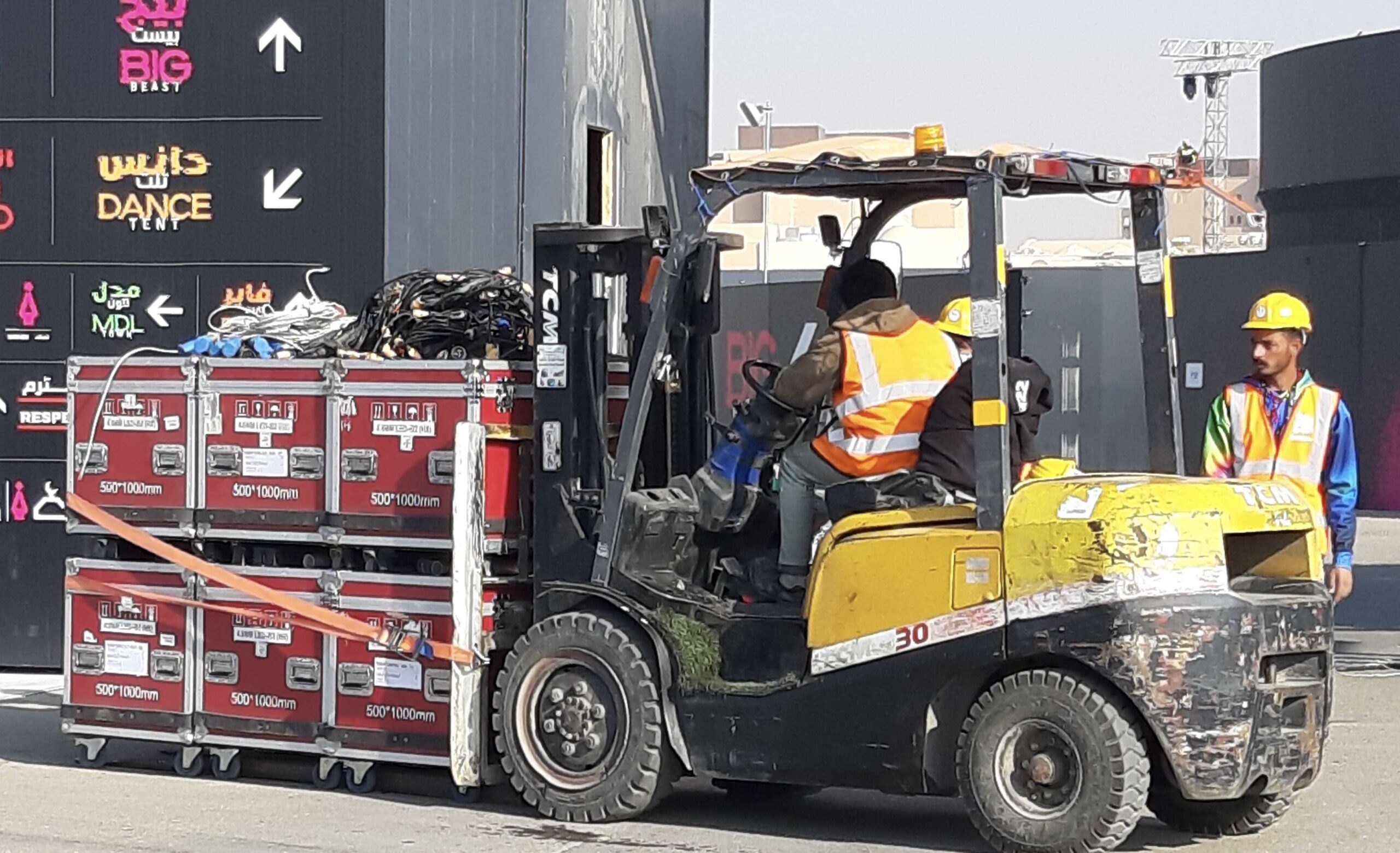
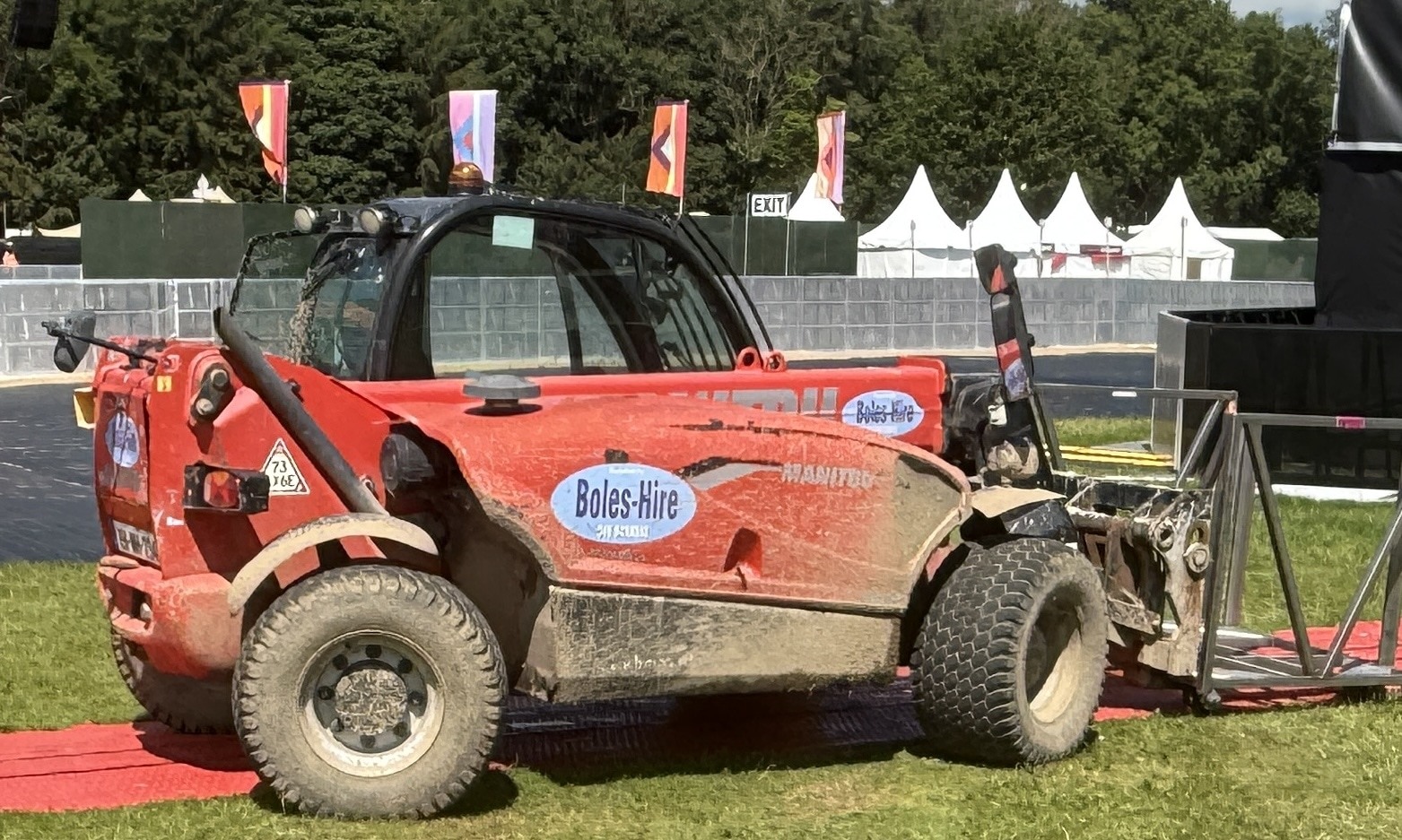
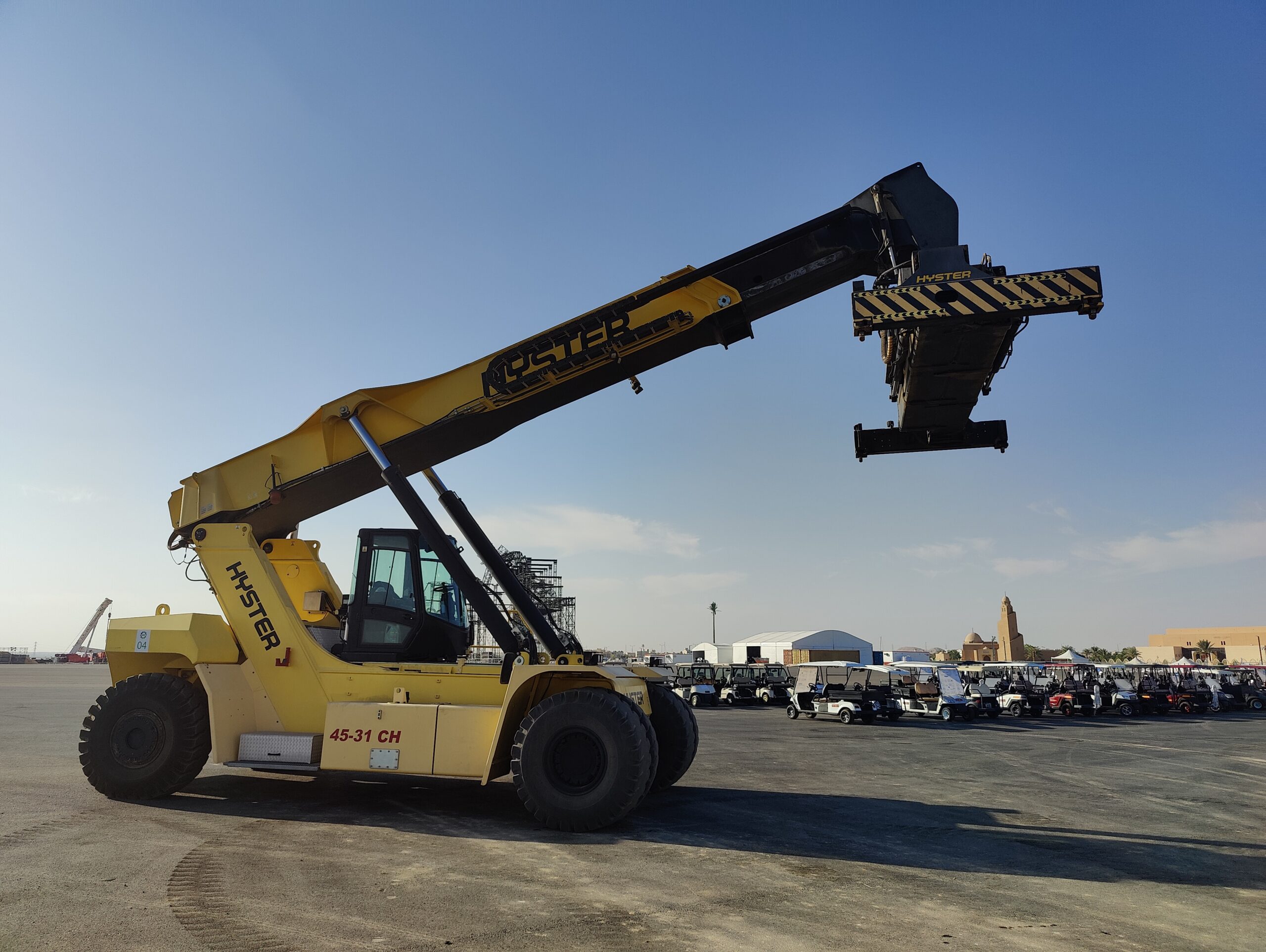
Forklifts move the flightcases, telehandlers lift the heavy kit into place, MEWPs carry crew up to the rigging, and chains and slings take the weight of everything that hangs. This machinery is what makes a build possible in the time available. It is also some of the most dangerous kit on site, and a safety inspector knows it.
Two things have to be true for any of it to be safe.
The machine itself has to be sound, and the person operating it has to know what they are doing. Get either wrong and a forklift tips, a load drops, or a sling fails with a person underneath.
This is a companion piece to our wider article on engaging with the HSA on your event site. It works on its own too, as a practical look at the safe use of work equipment on a build i.e. the forklifts, telehandlers, MEWPs and lifting gear, and what tells us they are in safe hands.
Two Layers of Duty Worth Knowing
You do not need to be an engineer to oversee this, but it helps to know that work equipment sits under two layers of duty.
The first covers all work equipment, from a cordless drill to a telehandler. It has to be suitable for the job, maintained in safe condition, and used by people trained to use it. In the UK this is PUWER, the Provision and Use of Work Equipment Regulations.
The second is a tighter layer that applies specifically to anything that lifts, whether it is lifting loads or lifting people, and in the UK that is LOLER, the Lifting Operations and Lifting Equipment Regulations. Lifting gear carries extra duties because the consequences when it fails are immediate and severe. These are British regulations, and other jurisdictions have their own, but the two-layer logic behind them is close to universal.
The practical upshot for an organiser is the part to hold onto is this – lifting equipment has to be examined by a competent person on a defined cycle, and that examination is a separate thing from the quick check an operator does before using it.
Both have to happen.
The Examination Most People Have Never Heard Of
Every piece of lifting equipment on your site should carry a current record of thorough examination, a formal inspection by a competent examiner that goes well beyond a visual once-over. The cycles are worth knowing because they are easy to check:
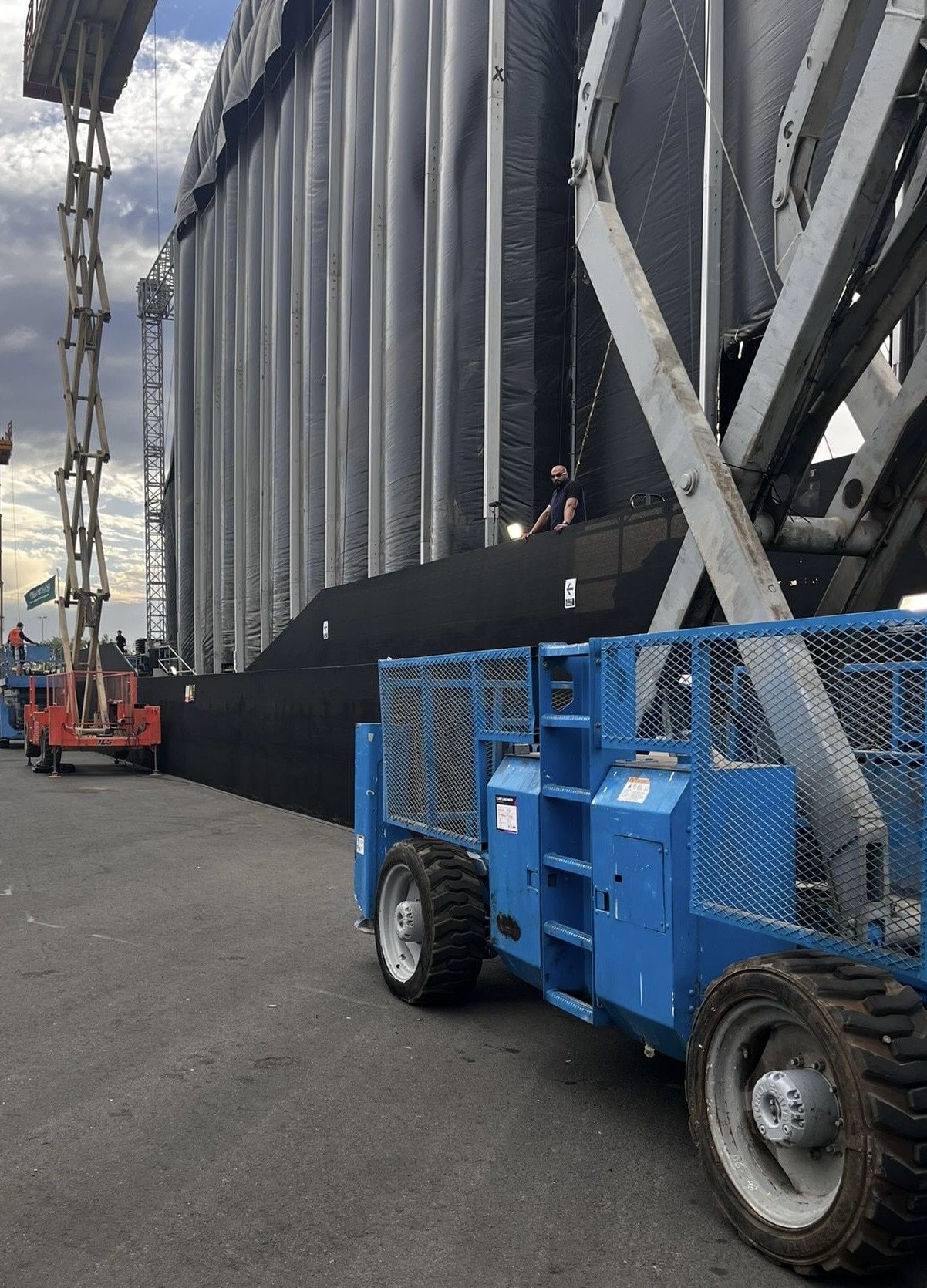
- Anything that lifts people, such as a MEWP or a scissor lift, is examined at least every six months.
- Lifting accessories, the chains, slings, shackles and hooks, are examined at least every six months, because every lift puts the load straight through them.
- Forklifts, telehandlers and cranes are examined at least every twelve months.
An organiser does not need to interpret an examination report.
What an organiser can do is ask whether the equipment on site has a current one, and a competent supplier produces it without fuss. A MEWP carrying crew to a stage roof with no in-date examination record is a serious problem, whatever else is right about the site.
The daily check is a different thing
Alongside the formal examination sits the operator’s pre-use check, done at the start of a shift before the machine goes to work. Tyres, hydraulics, controls, warning devices, the obvious damage.
The two sit at different levels and neither stands in for the other. A site where operators are running daily checks is one where the kit is being looked after in the gaps between the formal examinations.
The Operator Has to Be Trained for That Machine
A licence to drive a car says nothing about operating a telehandler.
Forklifts, telehandlers and MEWPs each need an operator trained and certified for that category of machine, and the certification needs to be current. This is the same competence question that runs through everything on a build, applied to the person in the cab.
There is a detail here that catches people out.
There is a detail here that catches people out, and it is worth getting right. A telehandler or forklift is built to lift loads, not people. You can fit a platform to lift someone, but the rules are tighter than most assume.
Purpose-built integrated platforms have their own controls in the platform and are the proper engineered option. A basket or cage slung on the forks is more restricted: the operator runs everything from the ground, and in the UK that arrangement is permitted only for occasional, unplanned work where hiring in proper access equipment is genuinely impractical.
The HSE sets this out in its guidance note PM28: Working platforms (non-integrated) on forklift trucks. Other jurisdictions take their own view, and some are stricter still. It does not stand in for a MEWP on planned work, and anything lifting a person needs thorough examination every six months, not the twelve that applies to the machine as a load-handler.
So the thing to watch for is a cage on forks used as the everyday way to get crew up to height. That points to the right access equipment never having been brought to site.
Serious Lifts Are Planned, Not Improvised
A lift of any consequence is meant to be planned, not improvised on the day by whoever happens to be on the forks.
The plan does not have to be elaborate, but for a significant lift someone competent should have thought through the weight, the gear, the ground the machine stands on, the path the load travels, and who is kept clear underneath.
The thing we watch for is the casual lift. A heavy or awkward load going up with no evidence anyone planned it, people wandering under the load path, a machine working on ground nobody assessed. The presence of a thought-through lift plan for the serious lifts is one of the clearer signs a contractor treats this equipment with the respect it needs.
Keep People Out From Under the Load
The principle that runs through all of this is the same one that governs work at height. The danger is not only to the operator, it reaches everyone nearby. A dropped load, a tipping forklift or a MEWP catching a person at height all share the same victim, the person who happened to be in the wrong place.
There is an international show on which we have worked for 5+ years. We’ve had one ‘significant’ incident resulting in injury on it. It was a forklift versus pedestrian and the pedestrian came off worse, as you can imagine. The risks from machinery on events sites is very real.
Good practice keeps people clear. Loads are not carried over crew. The area a machine is working in is kept free of people on foot who have no reason to be there. Where a lift happens over a space people use, that space is closed while the lift is on. This is the same exclusion-zone thinking that governs overhead work, applied to the machinery moving the weight.
What We Look For When We Walk the Site
So when we walk a build with the equipment in mind, here is the short version of what tells us it is in safe hands:
- Lifting equipment carries a current thorough examination record.
- Operators are running pre-use checks at the start of the shift.
- Every operator is trained and certified for the specific machine they are on.
- Crew are lifted to height on a MEWP or proper integrated platform, not routinely on a cage slung on forks.
- Significant lifts have been planned by someone competent.
- People are kept clear of load paths and working machines.
You do not have to be an engineer to oversee this.
You have to know that two separate things matter, the machine and the operator, and to ask for evidence of both.
The Companion Reference Worth Reading
For the detail behind safe use of equipment and the examination of lifting gear, the body-of-reference guidance is the safety regulator’s.
The HSE’s guidance on the thorough examination and inspection of lifting equipment sets out who must examine what and how often, and the wider work-equipment duties sit alongside it. It is written for duty-holders rather than organisers, so it reads as a regulatory document, but it is the authoritative source behind the cycles and checks described here.
Where We Fit
On the events where we hold the build and break safety responsibility, the plant and lifting equipment on site is part of what we oversee.
That means checking that examination records are current, that operators are ticketed for their machines, and that the serious lifts have been planned and the load paths kept clear. We have done this across long-running builds like Wild Lights at Dublin Zoo and large-scale international concert sites where the lifting runs to serious weight.
If you are planning an event with significant plant and lifting and you want it overseen by people who treat the machinery with the seriousness it deserves, our Event Safety service is built for exactly that.
Get in touch and we will talk it through.
Frequently Asked Questions
What does safe use of work equipment cover on an event site?
It covers the machinery used to build and break the event: forklifts, telehandlers, MEWPs and lifting gear such as chains and slings. The two questions it answers are whether the equipment itself is sound and properly examined, and whether the people operating it are trained and certified for that specific machine.
What is a thorough examination and how often is it needed?
A thorough examination is a formal inspection of lifting equipment by a competent examiner, separate from the quick check an operator does before use. Equipment that lifts people, such as MEWPs, and lifting accessories like chains and slings are examined at least every six months. Forklifts, telehandlers and cranes are examined at least every twelve months.
Does a daily check replace the thorough examination?
No, they are different things at different levels. The operator’s pre-use check at the start of a shift looks for obvious problems with tyres, hydraulics, controls and damage. The thorough examination is a deeper statutory inspection on a fixed cycle by a competent person. A safe site has both happening.
Who is allowed to operate a forklift or telehandler at an event?
Only someone trained and certified for that category of machine, with current certification. A general driving licence does not qualify someone to operate plant. This is the same competence check that applies across the build, focused on the person in the cab, and a competent contractor can produce the tickets on request.
Can you put a work platform on a telehandler or forklift to lift someone?
Only within limits. A purpose-built integrated platform, with controls in the platform, is the proper engineered option. A cage slung on the forks, controlled by the operator from the ground, is permitted in the UK only for occasional, unplanned work where hiring in proper access equipment is genuinely impractical, never as the routine way to get crew to height. Anything lifting a person also needs thorough examination every six months. If a cage on forks is being used for planned work, the right equipment, usually a MEWP, was not brought to site.