Why We Recommend Full High-Visibility Vests Over Safety Sashes
Being seen is a basic requirement for anyone working on an event site, and a full high-visibility vest does that job better than anything else in common use.
Whether staff are working at a music festival, exhibition, family-fun event, or within transport areas, it is essential they can be clearly seen, especially around vehicles, plant, machinery, and in crowded or low-light spaces.
Safety sashes, which are commonly used in North America, offer minimal reflective coverage compared to full high-visibility vests.
They are light and quick to hand out, which is why they get used, but the reflective area is too small for higher-risk working environments.
At Safe Events Global, we recommend full high-visibility vests for several important safety reasons.
Recognition matters as much as reflectivity
Reflecting light is only part of the job. Someone looking across a site needs to register immediately that they are looking at a person.
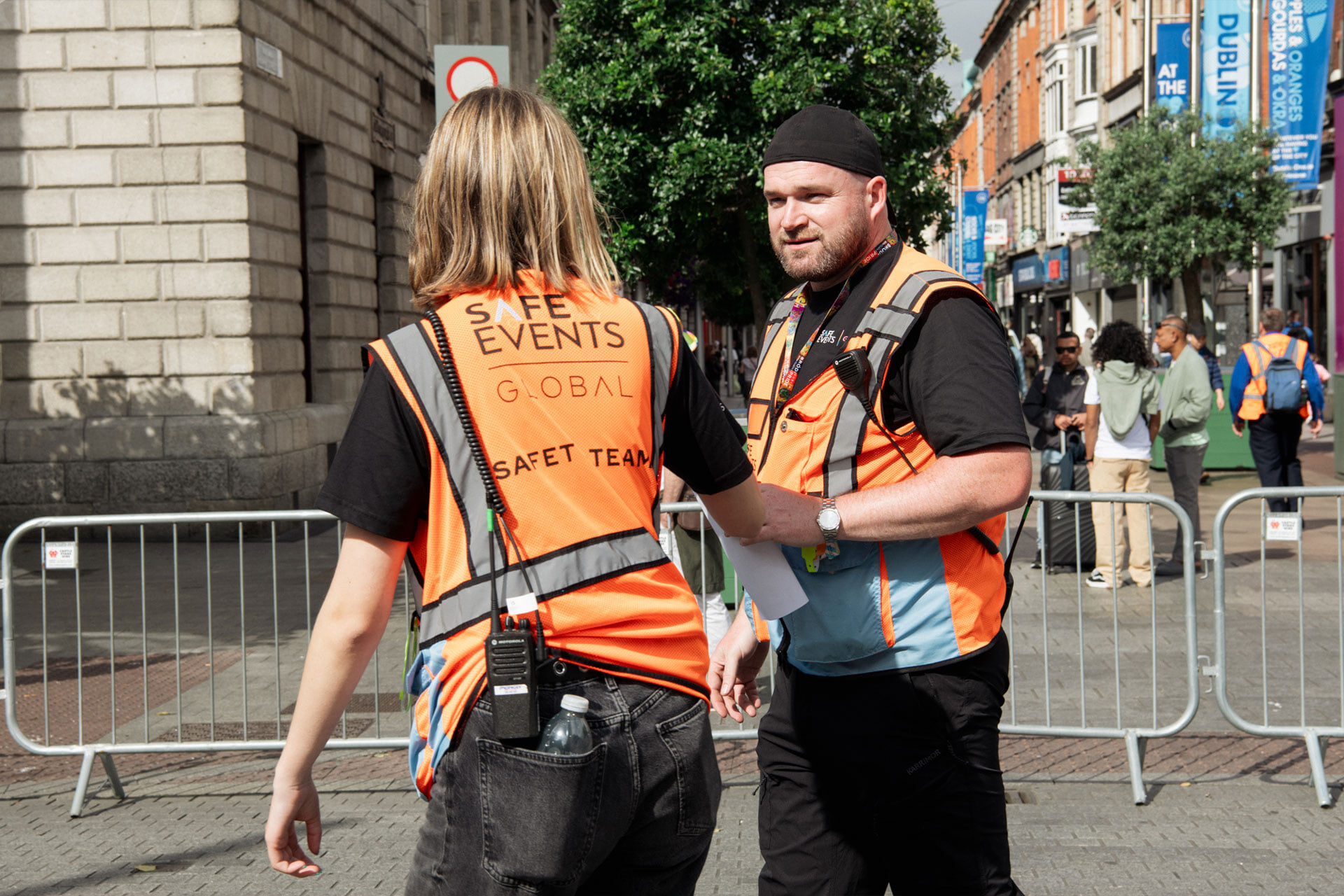
Full vests provide comprehensive torso coverage on all sides, making the wearer easy to recognise from distance and from different angles.
Safety sashes offer only narrow reflective bands that form diagonal or crossed strips.
From some angles those strips break up visually and read as part of the background.
Fluorescent coverage is critical during the day
A lot of visibility-related incidents happen in daylight, or in the awkward light around dawn, dusk, fog and shadowed areas.
A full vest gives one continuous fluorescent surface, so the wearer stands out against whatever is behind them.
Safety sashes, with their limited fluorescent area, do not provide the same level of daytime visibility and are often lost against standard clothing, especially darker uniforms or jackets.
Night-time visibility depends on surface area
At night, retroreflective material helps ensure someone is seen by vehicles and equipment.
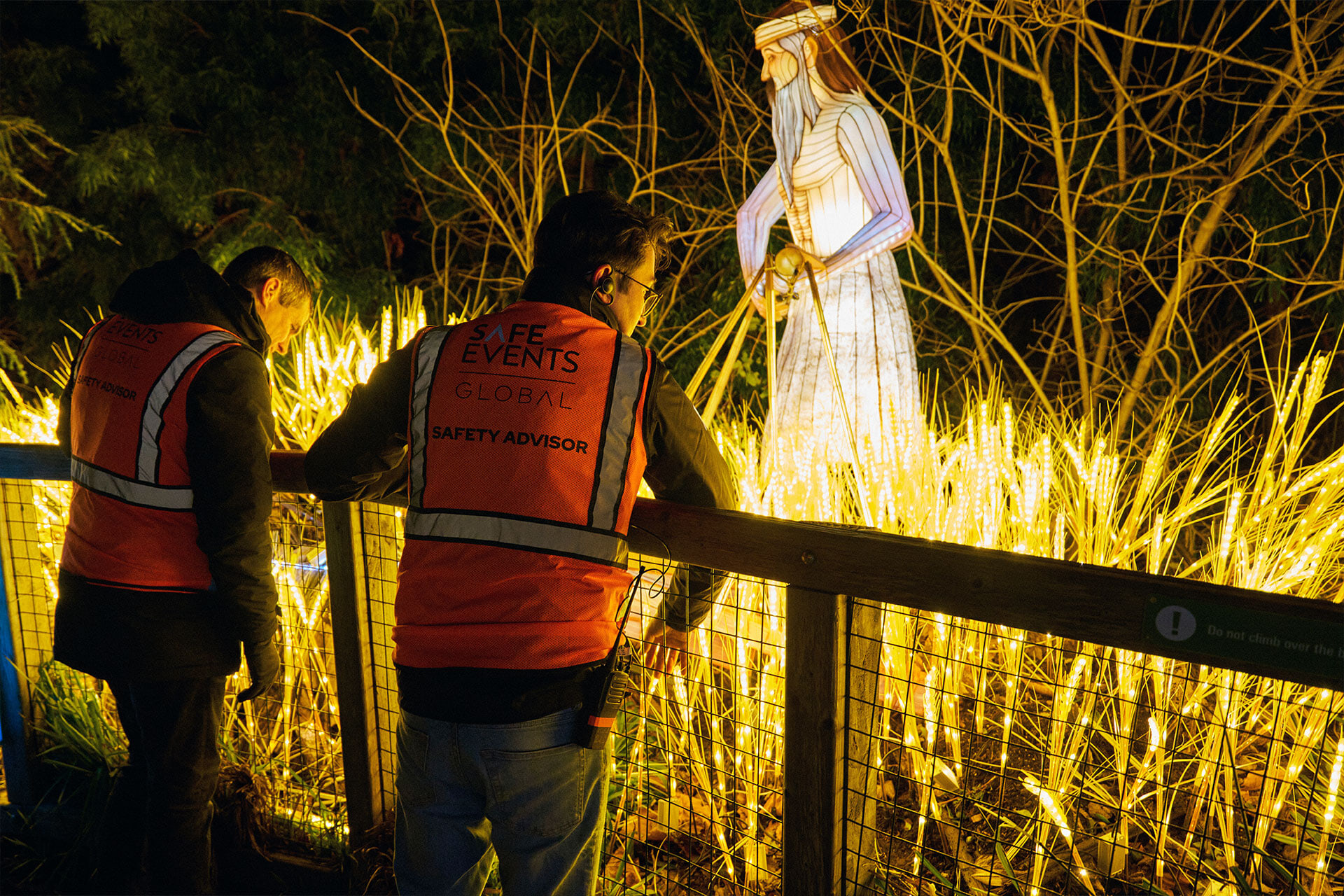
Full vests provide large reflective areas that wrap around the body, improving visibility regardless of orientation.
Sashes leave gaps, and a strip that is visible when someone is standing still can disappear the moment they turn or bend to lift something.”
Standards and compliance
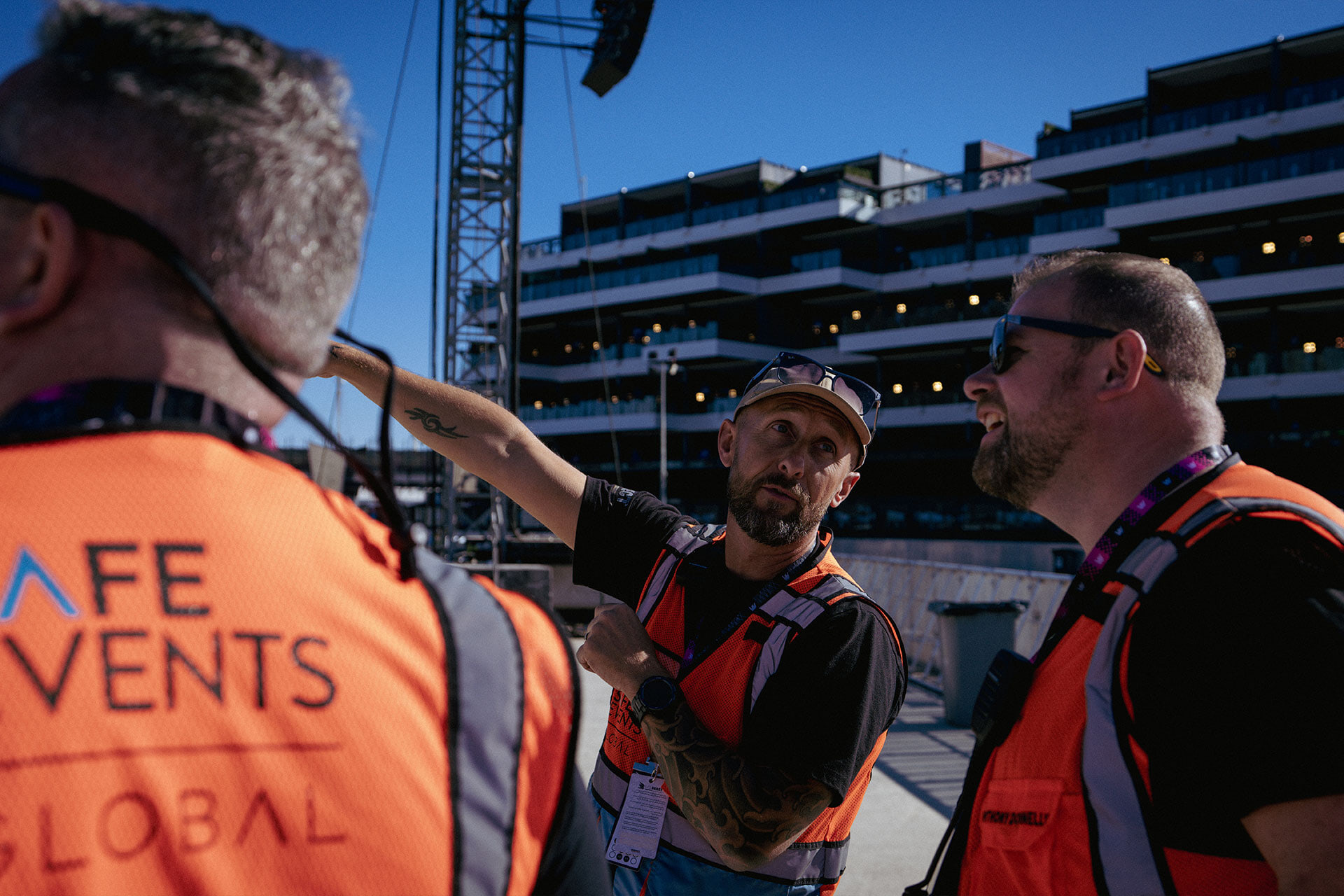
Full high-visibility vests can meet Class 2 or Class 3 safety standards under EN ISO 20471 (Europe) or ANSI/ISEA 107 (North America).
These classifications are designed for high-risk environments.
Most sashes sit at Class 1, or outside the classification system altogether. That is not enough where vehicles and machinery are moving, or where crowd density and low light are in play.
Real-world working conditions reduce sash effectiveness
On a live site, crew spend a lot of the day crouched down, kneeling, or squeezing sideways past barriers and plant.
Full vests maintain visibility because their coverage is uninterrupted.
A sash can slip out of position or be covered over entirely, often without the wearer noticing.
Practicality in operational settings
High-visibility vests also offer practical advantages.
They often include pockets, ID windows, radio clip points, and can be worn over different types of workwear, including jackets.
They provide some protection from wind, dust, or debris.
Our advice
For event or operational environments where vehicles, machinery, low-light conditions, or crowd density are present, full high-visibility vests are the safer and more appropriate choice.
Sashes are common in some parts of the world. That does not make them the right choice on a site where vehicles are moving and crowds are building.
If you would like guidance on selecting appropriate high-visibility garments for your teams or event, we are happy to support you.