The Question Behind All the Others
Walk onto any event build and you will find a dozen companies working at once.
Staging, audio, lighting, power, fencing, catering. Each turned up with their own crew, their own kit and their own idea of how things are done. The question that sits underneath every other safety question on that site is a simple one – who is actually in charge here, and how do they know what everyone is up to?
That is contractor supervision.
It is the least visible of the things a safety inspector looks at, because there is no piece of equipment or barrier to point to. The whole of it lives in whether competence got checked and whether someone is keeping an eye on the work. When it is missing, every other risk on the site gets worse.
This is a companion piece to our wider article on engaging with the HSA on your event site. It works on its own too, as a practical look at who is competent, who is in charge, and how that is being monitored on a busy build.
Competence Is Not a Self-Awarded Title
Every contractor on your site will tell you they are competent. The word does real work in safety, so it is worth being clear about what it actually means. It’sthe right blend of skills, knowledge, training and experience for the specific work being done.
For the trades, competence is something you can check.
Riggers, scaffolders, plant operators and electricians hold recognised qualifications and cards, and those should be current. Asking to see them is normal and a competent contractor has them ready.
The trickier part is the management layer. The person supervising the work needs to be competent too, familiar with the type of work planned, and there need to be enough of them for the size of the crew.
When we assess a contractor, we are not looking for a folder of certificates to tick a box. We want to see that the people doing the high-risk work are qualified for it, and that the person meant to be supervising them actually understands the work they are supervising.

Someone Has to Be in Charge of the Whole Site
Individual contractors managing their own work is not the same as someone managing the site.
On a multi-contractor build, the dangerous gaps appear in the spaces between companies: the rigging crew working above the cabling crew, the forklift crossing the route the fencing team is walking, two trades wanting the same space at the same time.
Somebody has to hold the whole picture.
On an event build that means a named person or organisation responsible for coordinating the contractors, setting the site rules, sequencing who works where and when, and monitoring that it happens safely. Different jurisdictions formalise this role under construction regulations, and the title varies, but the principle is constant: one party coordinates the site, and everyone else cooperates with them.
The test we apply is to ask a straightforward question on site and that is if two contractors clash over space or sequence, who decides? If there is a clear answer and everyone gives the same name, the site has coordination. If the answer is vague, the gaps between contractors are being left to chance.
Induction Is Where Supervision Starts
Supervision does not begin when something goes wrong.
It begins at the gate, with induction. Because the contractors on an event build do not share habits, the site has to give them a common set i.e. the rules, the hazards live on site today, the routes, the emergency arrangements, who to report a problem to.
A real induction means every person on the site has been taken through this before they start, and that it has actually landed. A signing-in sheet by the gate is not an induction. The crew need to understand the site they have walked onto, including the live hazards that are not obvious, like overhead work happening in an area they are about to cross.

Monitoring Means Being on the Floor
Checking competence at the start and writing good site rules counts for little if nobody watches the work happen. Plans drift on a live build. A method that was agreed in the office gets quietly dropped when it turns out to be slow, and a control that was in place first thing has been shifted by mid-afternoon to get something else done.
Good supervision is active.
The person responsible is out on site, watching the work, catching the thing that has slipped and challenging it there and then, not waiting in a cabin for an incident report to land. Crews behave differently when they know someone who understands the work is about.
This is what separates a genuinely supervised site from one that has a supervisor named on paper. A perfectly qualified person who is never seen on the floor supervises nothing.
What we look for is presence: someone who can tell you what is happening across the site because they have spent the day walking it.
The Subcontractor Underneath the Contractor
A specific trap on event sites is the chain that runs below the contractor you actually hired. The staging company brings in a crew from elsewhere. The crew brings in a couple of freelancers. By the time the work happens, the person on the tools is two steps removed from anyone you vetted.
This is not a reason to avoid subcontracting, which is how the industry works.
It is a reason to ask the contractor a direct question: how do you assure the competence of the people you bring in. A contractor managing the chain properly will walk you through how they check their own crews and freelancers. If the question has clearly never come up before, you have found the gap, and it runs all the way down to whoever ends up holding the spanner.
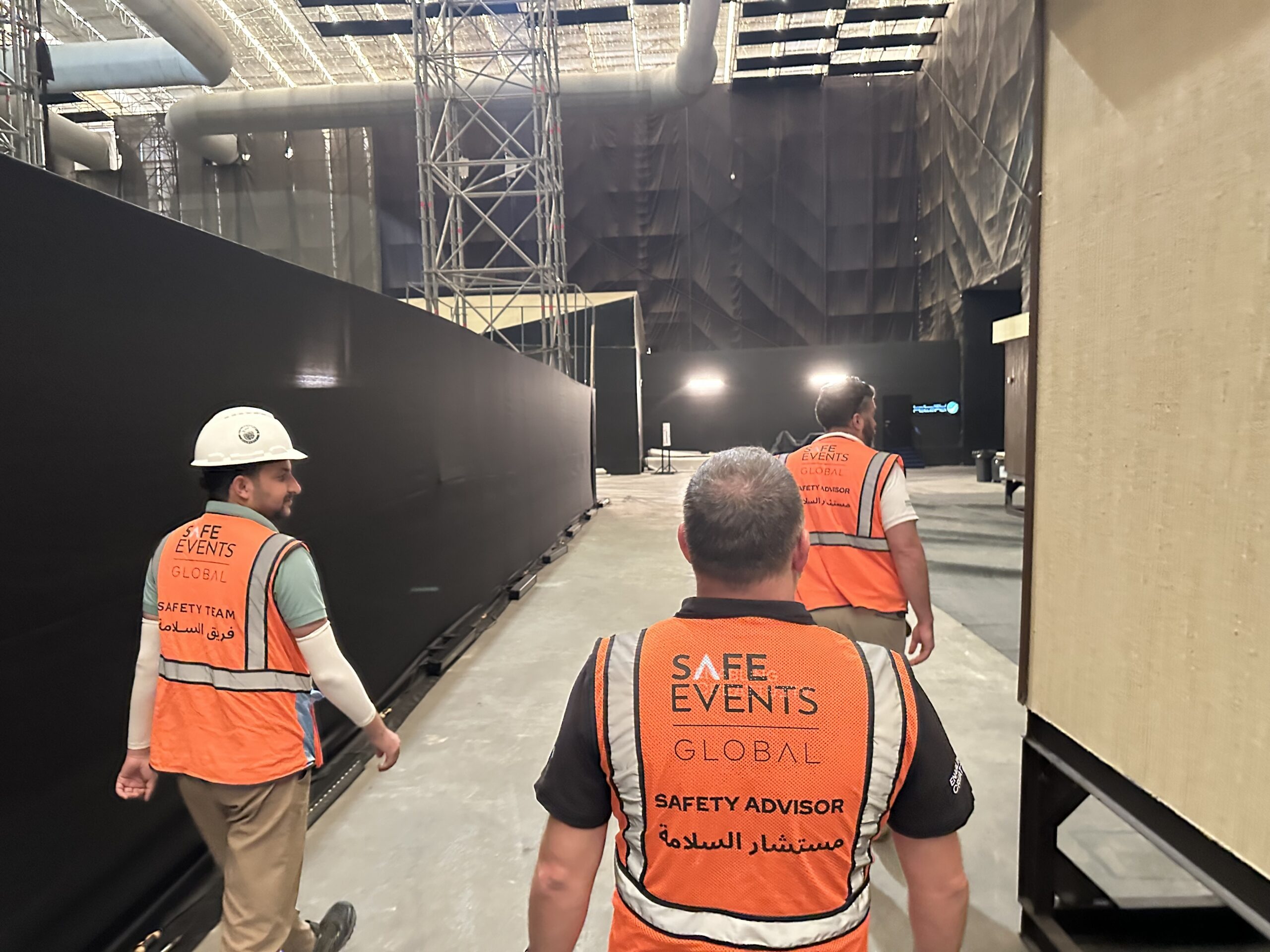
What We Look For When We Walk the Site
So when we walk a build or break with supervision in mind, here is the short version of what tells us it is in good hands:
- Competence can be evidenced for the trades, in current cards and qualifications.
- The supervisors understand the work they are supervising, and there are enough of them.
- One party clearly coordinates the whole site, and everyone names the same one.
- Everybody working has been properly inducted, not merely signed in.
- The responsible person is visibly out on the floor, not waiting in a cabin.
- Contractors can explain how they assure the subcontractors below them.
None of this shows up in a single object you can photograph. It shows up in the answers you get when you ask who is in charge and how they know what is going on. Vague answers are the warning.
The Companion Reference Worth Reading
For the formal duties around managing and coordinating contractors on event builds, the body-of-reference guidance is the safety regulator’s treatment of construction roles in the entertainment industry.
The HSE’s CDM 2015 roles and duties in the entertainment industry sets out who is responsible for what across the build and break phases of an event. It is framed around UK construction regulations, so the exact titles will differ in other jurisdictions, but the structure of responsibility it describes is the one we apply everywhere we work.
Where We Fit
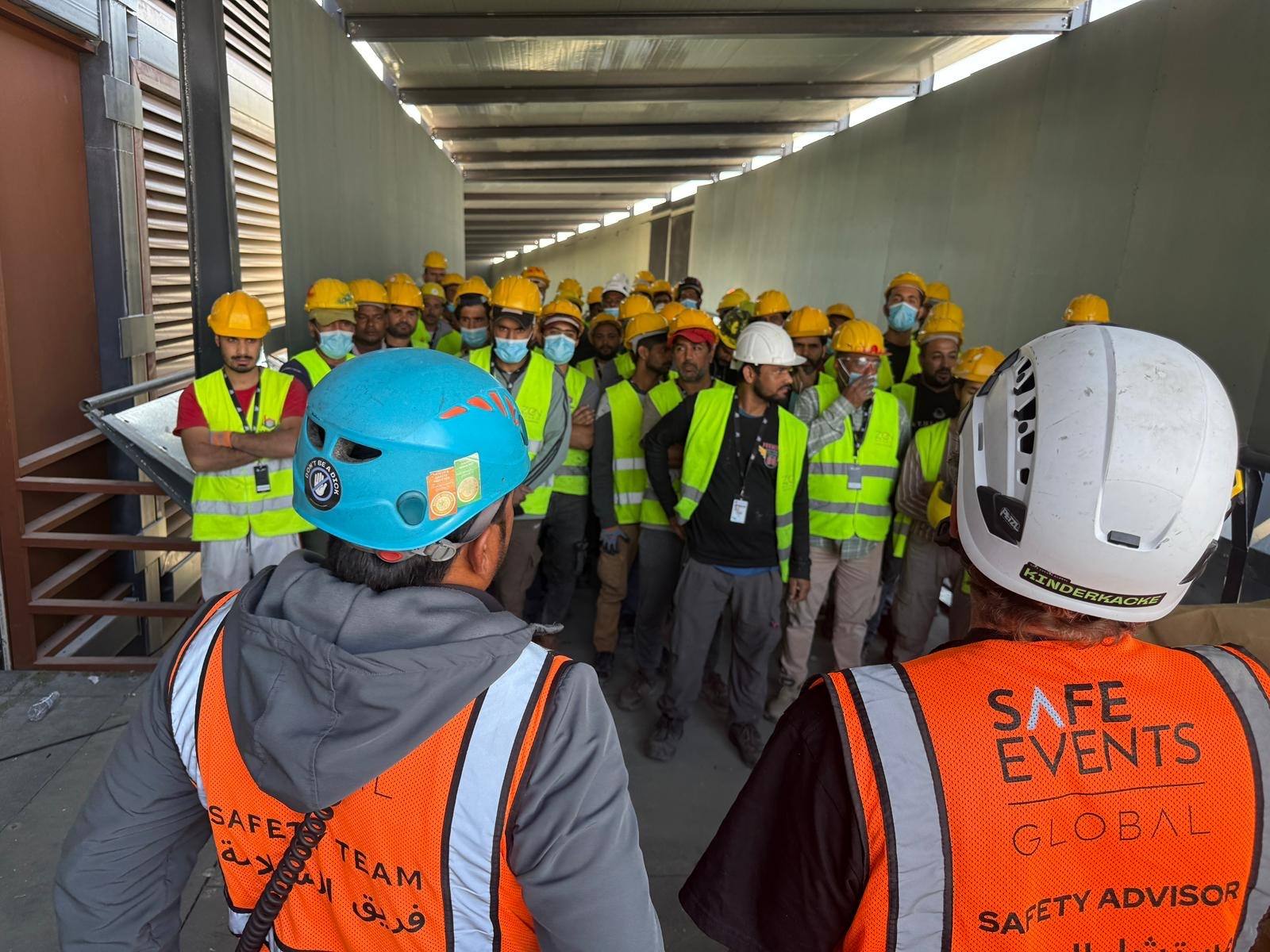
On many of our events we take on the build and break safety responsibility directly, and on a good number we fill the formal coordination roles under construction regulations.
In Ireland that means acting as PSCS or PSDP, the statutory project supervisor roles for the construction stage and the design process; other jurisdictions have their own equivalents of the same function.
Whatever the title, it puts us in the position of being the party who checks competence, sets the site rules, sequences the contractors and walks the floor. We have done this across long-running builds like Wild Lights at Dublin Zoo and large-scale international concert sites.
If you are planning an event with multiple contractors and you want the coordination held by people who treat it as the question behind all the others, our Event Safety service is built for exactly that. Get in touch and we will talk it through.
Frequently Asked Questions
What is contractor supervision on an event site?
It is the checking of contractor competence and the active monitoring of their work on a multi-contractor build. It covers verifying qualifications, inducting crews, coordinating who works where and when, and having someone responsible out on the floor making sure the work is done the way it was planned.
How do I know a contractor is competent?
Competence is the right blend of skills, knowledge, training and experience for the specific work. For the trades you can check it directly through current cards and qualifications for riggers, scaffolders, plant operators and electricians. For the management layer, look for supervisors who understand the work they are overseeing and are present in enough numbers for the size of the crew.
Who should be in charge of an event build?
One named party should coordinate the whole site, setting the rules, sequencing the contractors and monitoring the work, while everyone else cooperates with them. Different jurisdictions formalise this under construction regulations with different titles, but the principle is constant. The simplest test is to ask who decides when two contractors clash over space or sequence, and see whether you get one clear answer.
Why does induction matter so much?
Because the contractors on an event build arrive with different habits and no shared knowledge of the site, induction is how they are given a common set of rules, hazards, routes and emergency arrangements. A signing-in sheet is not an induction. Everyone working should have been taken through the live hazards before they start, or they will not know about risks like overhead work in the area they are entering.
What is the risk with subcontractors?
The person actually doing the work can end up several steps removed from the contractor you vetted, as work is passed down a chain to other crews and freelancers. The fix is not to avoid subcontracting but to ask each contractor how they assure the competence of the people they bring in, and to expect a clear answer. A contractor who cannot explain this has a gap that runs all the way to the person on the tools.