Introduction
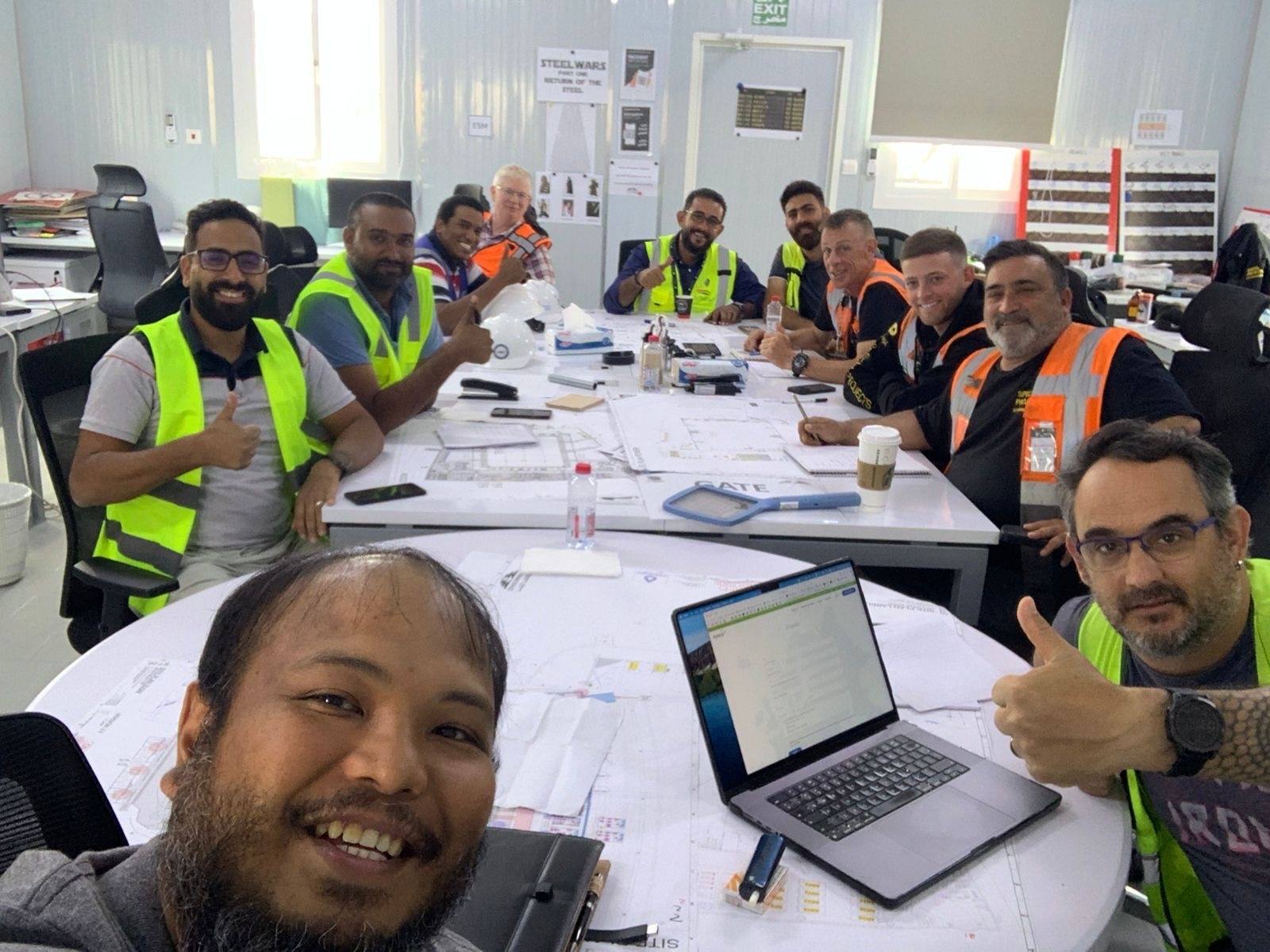
On a busy event build, hundreds of people might be lifting, driving, rigging and installing at pace, often in the same patch of ground at the same time. In that environment, communication does more work than almost any single control on the site. Toolbox talks are where a lot of that communication happens.
A toolbox talk is a short, focused briefing given to a crew before they start a task. It is a chance to stop, line everyone up on what the job involves, confirm what is expected and make sure the team starts with the same picture of the risks in front of them.
They are one of the simplest tools we use on site, and plenty of sites still run them as a box-ticking exercise. This guide covers when to run them, what good ones cover, how to deliver one that lands, and where they sit alongside the rest of your safety arrangements.
Why Toolbox Talks Matter More on Event Sites
Plenty of industries run toolbox talks. Construction has done it for decades. But an event site works differently to a construction site, and that difference is what makes these briefings so useful on a build.
Where a construction site develops over months, an event build can change hour to hour. A task that was low-risk yesterday is high-risk today because the wind has come up, the ground has churned, or a telehandler is now working ten metres from where your crew is on the tools. Shift patterns turn over, new contractors arrive mid-build, and kit gets moved without anyone telling you.
Toolbox talks give a crew a fixed moment to catch up with all of that: what has changed since yesterday, what is different about this corner of the site, what needs adjusting before anyone starts. Five minutes is often enough to catch a developing problem before it turns into an incident.
The second thing they do is push back against familiarity. When a crew has built the same stage a hundred times, the brain stops seeing the hazard. A short talk interrupts that, and gets people looking at the conditions actually in front of them that day.
When to Run a Toolbox Talk
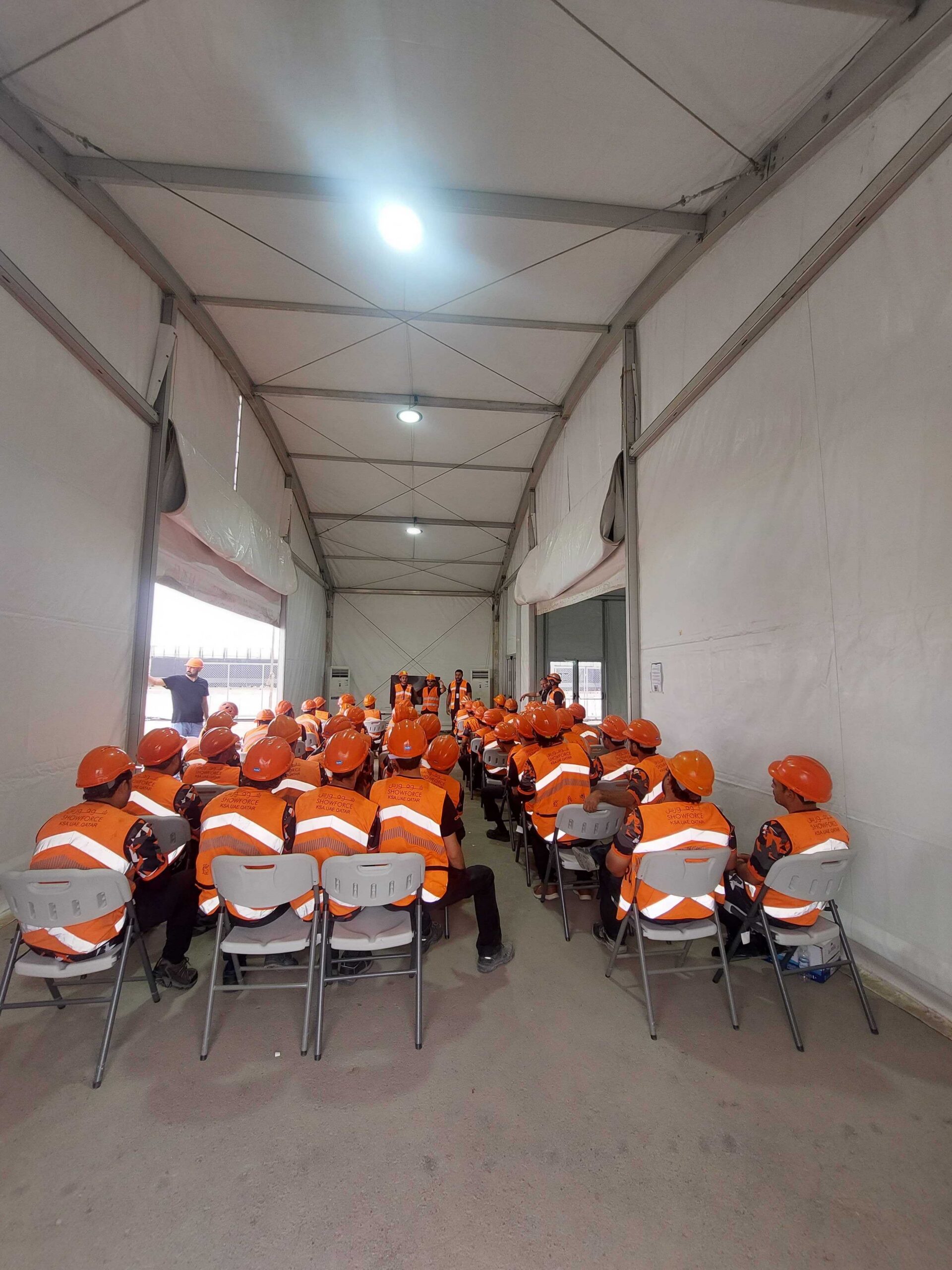
The default is the start of a shift, and that is fine as a baseline. But tying them only to mornings misses most of their value. The trigger should be the work, not the clock.
Run one before any high-risk activity: a crane lift, a confined-space entry, a complex rig, working at height. Run one when contractors interface, when the weather turns, or when a new piece of plant arrives on site. Anything with the potential to hurt someone badly is worth a structured conversation first.
They are just as valuable in moments of change. After a near miss. After a safety observation. Before a shift in the workflow. When a crew rotates onto a task they have not touched in weeks and the muscle memory has faded. In each of those, the talk brings everyone back up to date before anyone picks up a tool.
The principle is responsiveness. A toolbox talk run out of pure habit, read off a sheet because the procedure says so, does very little. One prompted by what is actually happening on the ground does the work.
What a Good Toolbox Talk Covers
The content shifts with the task, but a few themes come up again and again on well-run sites.
- The sequence: who is doing what, in what order, and when. Most interface problems on a build come from two crews assuming the other will go first.
- The hazards present right now: overhead power, unstable ground, live vehicle routes, adjacent work. Point at them where you can.
- What the job needs: the PPE, the tools, the safety kit that has to be in place before work starts.
- The escape plan: emergency procedures, who to call, which way out, where the access routes are.
Most talks leave out the most valuable part: giving the crew a chance to talk back. A toolbox talk should give the crew a chance to talk back. They are the ones with their hands on the job, and they routinely spot things a planner sitting in an office never saw. When a rigger flags that the ground by the anchor point is softer than it looks, that is exactly what the talk is for. It gives the crew a stake in how the job gets run. It turns safety from something handed down into something the crew owns.
Done consistently, these briefings also set the behavioural tone. They tell every worker on site that this is a job where safety is managed in real time, and the same is expected back from them.
How to Deliver One That Actually Works
A good toolbox talk is short, clear and has a point. Deliver it with some conviction. It should feel like a conversation, and ideally the person giving it knows the task well enough to speak about it from experience.
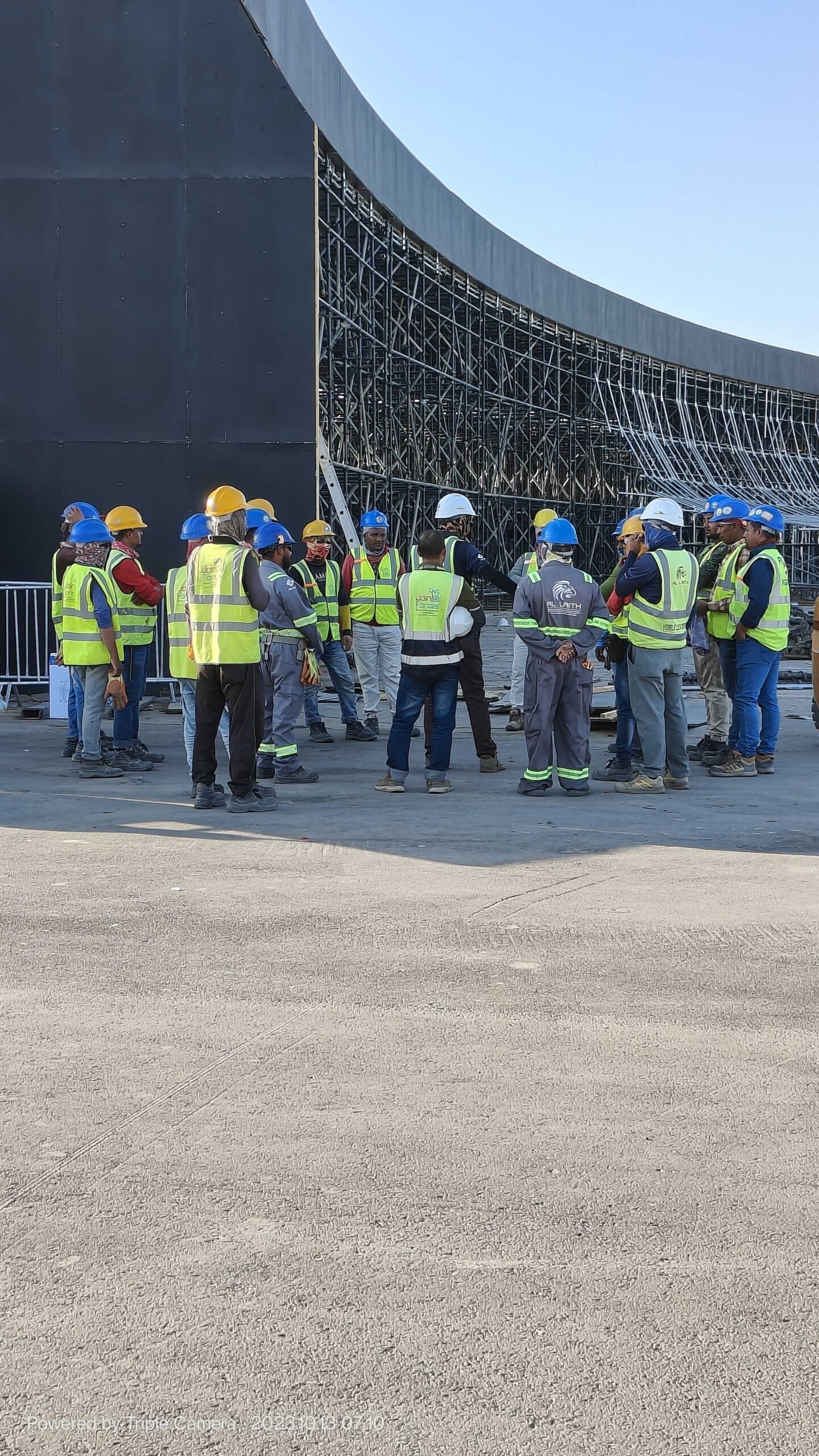
Where you stand matters. Run the talk in the work area itself, so the crew can see the context and you can point at the actual hazard in front of you. Our Safety Teams deliver toolbox talks at the point of work as a matter of course. The only time we move it is when activity in that area is busy enough to make standing there unsafe.
Check understanding. Ask questions, invite comment, confirm understanding. A briefing that was heard but not absorbed has failed quietly, and you will not find out until something goes wrong. The crew should walk away knowing what is expected, what could hurt them, and what is in place to stop it.
Keep a record, but do not let the record become the point. A signed sheet proving the talk happened is useful if you are ever asked to show your safety arrangements held up. It is worthless if half the crew spent the briefing signing the sheet instead of listening. The record is evidence that the talk happened, and nothing more than that.
Where Toolbox Talks Fit in the Wider Picture
No single measure carries an event’s safety on its own. Toolbox talks work because they sit inside a layered approach: Risk Assessment, method statements, inductions, supervision, site rules, signage and monitoring all pulling in the same direction.
What the talk does that the others cannot is carry the planning into the live environment. A Risk Assessment written six weeks out is only as good as the crew’s awareness of it on the day, and the talk is where that awareness gets refreshed It reinforces what was said at induction. It prompts a crew to think about the risk in front of them instead of assuming someone upstream has already dealt with it.
This is the same thinking that sits behind Safety by Design: get the right information to people at the point where they need it, and a lot of problems never form. Run toolbox talks routinely and your contractors see that safety here gets managed on the ground, every day.
Bringing It Together
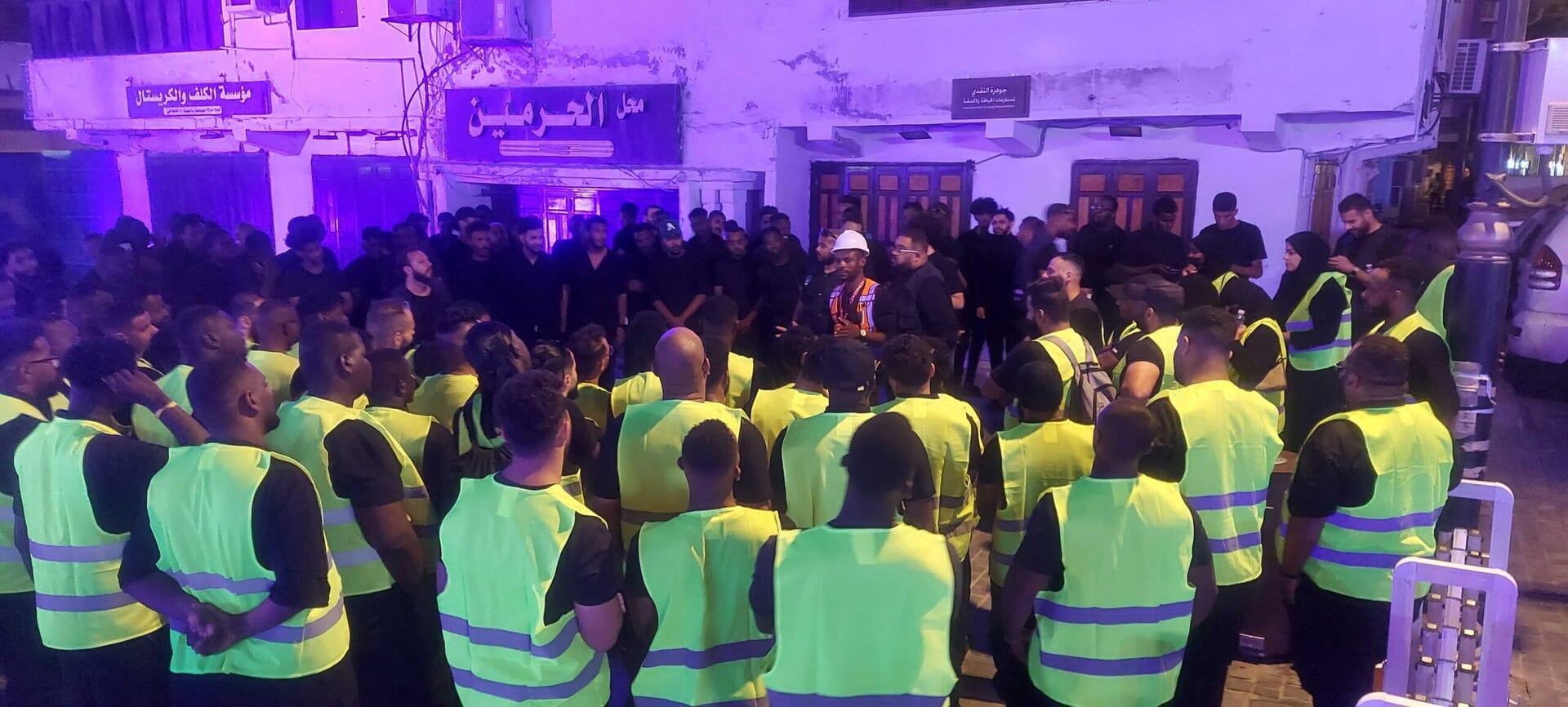
Toolbox talks are one of the most useful tools on an event site precisely because they are simple, quick and rooted in what is actually happening that day. They build shared understanding and cut the guesswork that causes most of the clashes between crews. That ties the planning phase to what the crew actually does next.
On a site where the tasks vary, the conditions move fast and a dozen contractors work side by side, they help make sure everyone starts the job with the same understanding of it. At Safe Events Global, we treat them as part of how a site gets run, and we keep a bank of toolbox talk resources.
If you want a hand getting your build-phase safety arrangements right, including how briefings, inductions and Risk Assessments fit together on the ground, talk to us.
Frequently Asked Questions
How long should a toolbox talk be?
Short. Five to fifteen minutes is the working range, and shorter is usually better than longer. The aim is one or two focused points the crew will actually remember. If it runs long, it stops landing.
Who should deliver toolbox talks on an event site?
Ideally someone who knows the task and can speak about it from experience instead of reading from a script. That is often a supervisor, a foreman or a member of the safety team. What matters is credibility with the crew and enough familiarity with the work to answer a real question on the spot.
Are toolbox talks a legal requirement?
In most jurisdictions toolbox talks are not named in law as a specific obligation. What the law typically does require is that workers receive adequate health and safety information and instruction relevant to their work. Toolbox talks are one of the most practical and well-recognised ways of meeting that duty, which is why they are treated as standard good practice.
How are toolbox talks different from a site induction?
An induction is a one-off briefing that gets a worker onto the site in the first place, covering site-wide rules, layout and emergency arrangements. A toolbox talk is recurring and task-specific, run again and again as the work and conditions change. The induction gets you in the gate. The toolbox talk keeps you current once you are working.
How often should toolbox talks happen?
As often as the work and conditions justify, instead of on a fixed timetable. A daily start-of-shift talk is a sensible baseline on an active build, with additional talks triggered by high-risk tasks, weather changes, new contractors arriving or anything that shifts the risk picture. How much the work and conditions change is what should set the frequency.