Introduction
The World Cup has been on for a few weeks now, and the action reaches well beyond the stadiums.
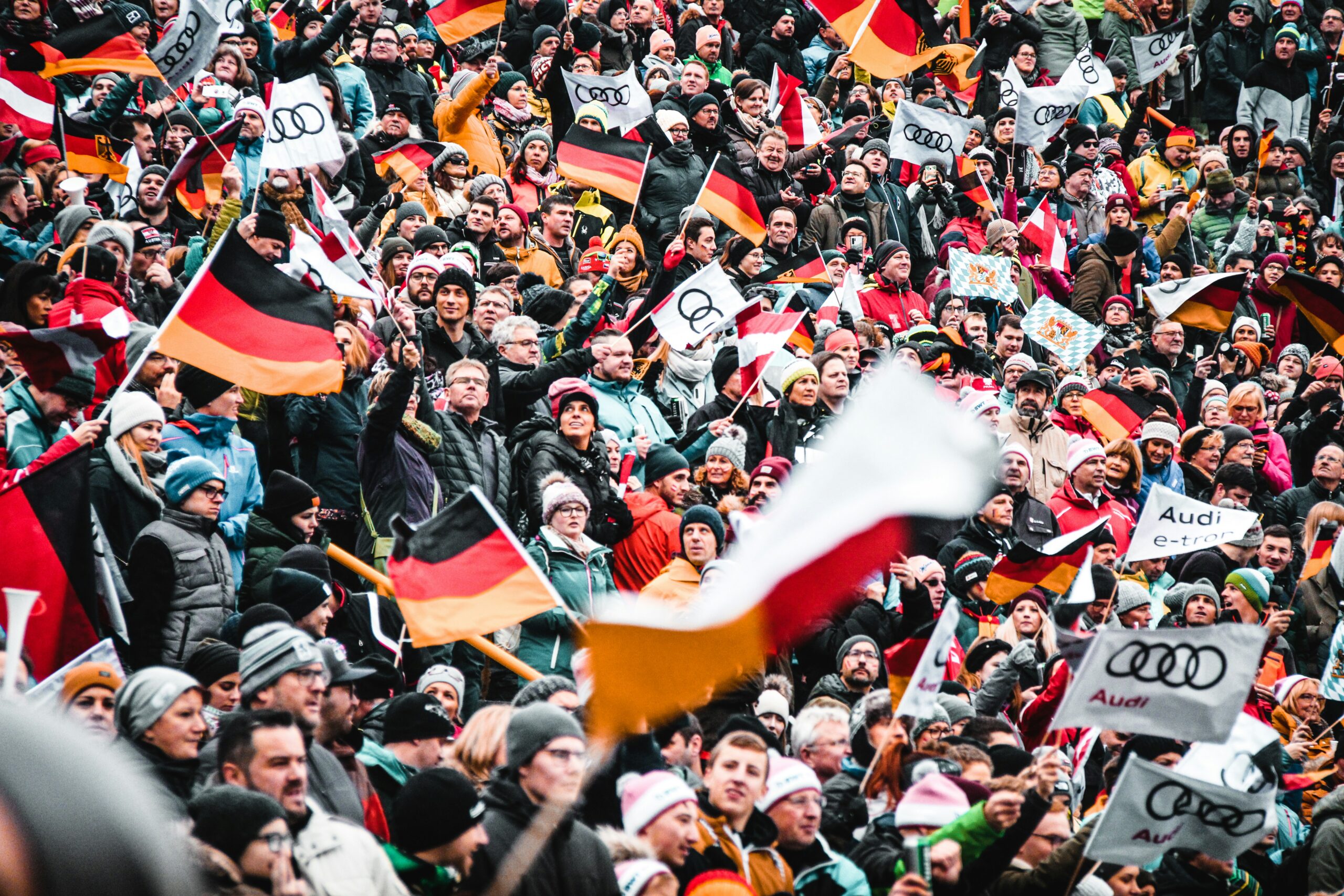
Right across the host cities, fan zones and fan festivals are pulling enormous crowds into parks, squares and waterfronts to watch the games on big screens.
Most are free. Most are unticketed. That combination makes fan zone safety one of the harder jobs in our line of work.
It did not take long for the tournament to prove the point.
On the opening day, Mexico City’s fan zone hit capacity and organisers turned supporters away to other plazas, while road closures left people walking an hour or more to reach the area around the stadium.
The crowd was there. The space ran out.
That gap, between the people who turn up and the space you have for them, is the thing a fan zone has to solve.
We have delivered safety on a large-scale, long-run World Cup show before, including Aravia in Qatar in 2022.
So here is our plain take on why a free public viewing site is harder to plan for than a sold-out arena, and what good practice looks like when the gates are open to everyone.
Why Free and Unticketed Changes Everything
A ticket is a planning tool as much as a payment. It gives you a rough headcount, a way to cap numbers, and some idea of who is coming before they arrive. Take it away and you lose all three.
A free, unticketed fan zone gives you none of them for granted.
You might get 8,000 on a quiet group-stage afternoon or a site-busting surge when a popular nation kicks off nearby. You do not control the inflow at source. And the crowd profile shifts game by game depending on who is playing and who lives in the area.
This is why a fan zone Risk Assessment has to work so much harder than one for a ticketed show. It cannot lean on a fixed number. It has to plan for a range, and for the day the crowd blows past that range.
The capacity problem
Every site has a safe capacity.
The difference at a fan zone is that nobody bought a ticket confirming they are inside it, so the cap has to be held at the perimeter, in real time, by counting people in and out and closing entry the moment the threshold is hit.
That sounds simple on paper.
On a hot match day, with a popular team about to kick off and a crowd already pressing at the entrance, holding that line is one of the hardest things an operations team does.
It needs a live occupancy count, one clear decision-maker, and the nerve to shut the gates while the screen still looks like it has room.
We have seen what happens when that line fails.
At the last World Cup, the main fan festival in Doha was overwhelmed on the opening day, shut once it hit its 40,000 capacity, with people pushed against barriers as security tried to hold them back.
The Copa América final at one of this tournament’s own host stadiums saw fans breach the gates entirely.
In both cases the cause was the same more people than the controlled space could safely take, and too little done early enough to manage the overflow.

The Surge Nobody Controls: Match Rhythm
A music festival builds to a headliner you scheduled. A fan zone runs on a match clock you do not control and a result you cannot predict.
Kick-off creates an arrival surge.
Half-time empties people toward bars, food and toilets, then pulls them straight back. A late winner sends a wave of elation through the crowd, and a contentious decision can flip the mood of thousands in seconds.
None of that is on a run sheet you wrote in advance, because the game writes it for you.
Planning fan zone safety means planning for the emotional arc of a football match, not just the physical movement of a crowd.
When the Gathering Has No Site at All
The fan zone problem has a wilder cousin and that is the spontaneous gathering with no perimeter, no screen you control, and no organiser at all.
We are watching a live example of it this summer, and it is not even at the football.
Through the Knicks’ run to the NBA Finals, thousands of fans have flooded the streets outside Madison Square Garden after games. One watch party drew an estimated 6,000 people into the surrounding blocks, with fans climbing on subway entrances and throwing bottles, and the police pulled the outdoor screenings as a result.
Ahead of a later game, the authorities barred fans from gathering near the arena at all, and a planned official watch party was cancelled in a dispute over crowd size. The gathering happened anyway, with arrests and injured officers afterwards.
There is a lesson in that for anyone planning a public viewing site.
Banning the gathering did not remove the crowd. It removed the managed version of it, and the unmanaged version was worse.
A crowd that wants to gather will gather. The safety question is whether it does so inside something you have planned, or outside everything you control.
Alcohol, Heat and a Long Run
Two more pressures stack on top.
Most fan zones serve alcohol, and many tournaments run in summer heat, and both raise the medical and behavioural load as the day wears on.
Then there is duration.
A World Cup fan festival is not a single night. Many run for weeks, opening on every match day across the tournament, and that changes the safety job entirely.
You are not delivering one peak and going home. You are sustaining standards across a long run, with rotating staff, fatigue creeping in, and the quiet temptation to ease off the controls on a mid-week game that does not feel busy.
We saw the long-run dynamic up close on Aravia, a 28-night run during the 2022 World Cup in Qatar that drew over 60,000 people across the programme, serving international visitors there for the football alongside local audiences. Aravia was a ticketed entertainment destination, not a fan zone, so the access model was different.
But the discipline of holding standards consistently across weeks of programming, for an internationally mixed crowd, on a site that blended permanent and temporary build, transfers straight across.
Holding that consistency over weeks is harder than delivering a single big night, and it is where a lot of long-run events slip.
Should Free Mean Unregistered?
Free and unregistered are two different choices, and the industry too often runs them together as if free entry rules out any kind of advance booking.
It does not.
You can run a fan zone that costs nothing to attend while still asking people to register for a free, capacity-limited slot. Plenty of this tournament’s host cities are doing exactly that. Atlanta, Philadelphia and New York’s borough fan zones are free but require advance registration, while Dallas has gone the other way, free entry with no registration and a capacity that swings from 35,000 on a standard day to a planned 100,000 when Argentina play.
Both models can work safely. They just demand very different operations.
Registration buys you a forecast of numbers, a channel to send weather or emergency messages, and a soft cap before anyone leaves home. It does not solve the walk-up problem on its own, because plenty of people still arrive on spec. What it does is turn a complete unknown into an educated estimate.
The trade-off is spontaneity.
For some people, part of what makes a fan zone work is that you can wander in off the street, and we are not saying every site should gate registration.
The point is narrower. Free entry is not a reason to plan less. If you choose pure walk-up, your Crowd Safety provision has to be heavier to carry the extra uncertainty, not lighter.

Designing the Site to Do the Work
The best fan zone safety is built into the layout long before anyone arrives.
This is Safety by Design applied to public viewing, and it decides how the day actually runs.
A well-designed site keeps arrival and departure apart, so an incoming surge never collides with people trying to leave. It gives the crowd room to spread rather than funnelling everyone toward one screen, which is what turns a happy density into a dangerous one at the big moments.
It treats the half-time rush on bars and toilets as a scheduled event rather than a surprise. And crucially, it puts the counting points where they can actually hold a capacity line, with the sightlines or camera coverage to read density before it becomes a problem.
Get the design right and the team on the ground has a fighting chance. Get it wrong and no amount of staff on the day fully makes up for it.
Closer to Home
We are currently planning a homecoming event for a sports team here in Ireland.
These are often the type of events that are free and unticketed.
In this instance, it will be free but not unticketed. This makes managing safety and ensuruing everyone enjoys themselves much easier.
In Ireland, we’ve seen over many years the real challenges and issues that can arise from these types of events.
Conclusion
Fan zones are one of the best things about a modern tournament, and this World Cup has shown both the appeal and the strain so far.
The free, unticketed model is what sits underneath the challenge: no reliable headcount, no controlled inflow, and a crowd whose mood swings with a game you cannot script, over a run that lasts weeks rather than hours.
None of that is an argument against fan zones. It is an argument for planning them properly and designing them well, and for resisting the idea that free entry means safety can be lighter.
If you are planning a fan zone, a public viewing site or any large free-entry event and want a steer on getting the crowd safety right, get in touch.
Frequently Asked Questions
What is the biggest fan zone safety risk?
The single hardest challenge is capacity control without tickets. Because attendance is not capped at the point of sale, the safe number has to be held live at the perimeter by counting people in and out. The pinch points are the emotional peaks, a goal or a final whistle, when density and movement spike together.
How is a fan zone different from a ticketed event for safety planning?
A ticketed event hands you a known number, a controlled inflow and an audience profile in advance. A free, unticketed fan zone removes all three, so the safety plan has to work with a range of possible attendances rather than a fixed figure, and it has to be able to close entry cleanly when the site fills.
Does a free event still need a Risk Assessment?
Yes, and arguably a more demanding one. Free entry does not lower the risk, it strips out some of the controls a ticketed model gives you for nothing. A thorough Risk Assessment for a free site has to account for unknown numbers, weather, alcohol and the rhythm of whatever is being watched.
Should a free fan zone use registration?
It is worth serious thought. Free registration keeps the event open and no-cost while giving organisers a forecast of numbers, a soft cap and a channel for emergency messaging. If you opt for pure walk-up instead, the on-site crowd safety provision needs to be heavier to carry the extra uncertainty.
How do you plan for crowd surges at a fan zone?
You plan around the match clock. Kick-off, half-time and full-time create movement you can anticipate, while goals and results create intensity you cannot. Good site design separates arrival from departure, spreads the crowd across more than one focal point, and keeps emergency access clear so surges can be absorbed safely.