Introduction
Crowd psychology – understanding how people think and act in crowds – is central to creating safe, inclusive, and well-managed events.
Crowd psychology reveals that collective behaviour is rarely chaotic or irrational. It is shaped by shared goals, values, and identities.
For event organisers and safety professionals, recognising this can transform how crowds are managed, making events safer and more positive for everyone involved.
The Psychology of Crowds and Group Behaviour
The study of crowd psychology explores how individuals behave when part of large groups. In the wake of global events such as the COVID-19 pandemic, public behaviour and collective responsibility have been under renewed scrutiny.
Yet, much of what people assume about crowds – that they are unpredictable, emotional, or dangerous – does not hold up under modern research.
Rather than being driven by “mob mentality”, people in crowds typically act with purpose and alignment to the group’s shared values. This understanding has major implications for how events are planned and managed.
For related insights, read Understanding the Myth of Mass Panic, a guest post by Sascha Kollaritsch, and Our Guide to Preventing Crowd Stampedes
The Myth of the Irrational Crowd
In the late nineteenth century, theorists like Gustave Le Bon described crowds as irrational, impulsive, and easily led astray. This idea of the “dangerous mob” influenced decades of crowd management and policing, in particular.
Importantly – Crowd Safety and crowd management are not the same thing.
However, research led by psychologists such as Dr Steven Reicher challenges this outdated view.
Crowds are not mindless – they are purposeful.
Access Reicher’s seminal paper here, which focuses on the St. Pauls’ riot to evidence his position.
Prof. John Drury and Christopher Cocking worked with Reicher to produce another paper, entitled ‘The psychology of crowd behaviour in emergency evacuations: Results from two interview studies and implications for the Fire and Rescue Services‘, which furthers the case.
Prof. John Drury and his team continue to do a lot of good work in this area. We’ve had John deliver his Masterclass in Ireland multiple times. Crowd Psychology for Crowd Safety Management is an important topic of study and understanding.
People behave according to the identity and norms of the group they belong to.
Whether that behaviour becomes constructive or destructive depends largely on context and leadership, not on an inherent loss of reason.
This all speaks to a point we frequently make in here. When issues happen at events featuring crowds, they are typically the fault of those planning and delivering the event. They are usually not the fault of the people in the crowd.
Group Identity and Behaviour in Crowds
When people join a crowd, their sense of self often shifts from an individual identity (“I”) to a shared social identity (“we”). This shapes how they act.
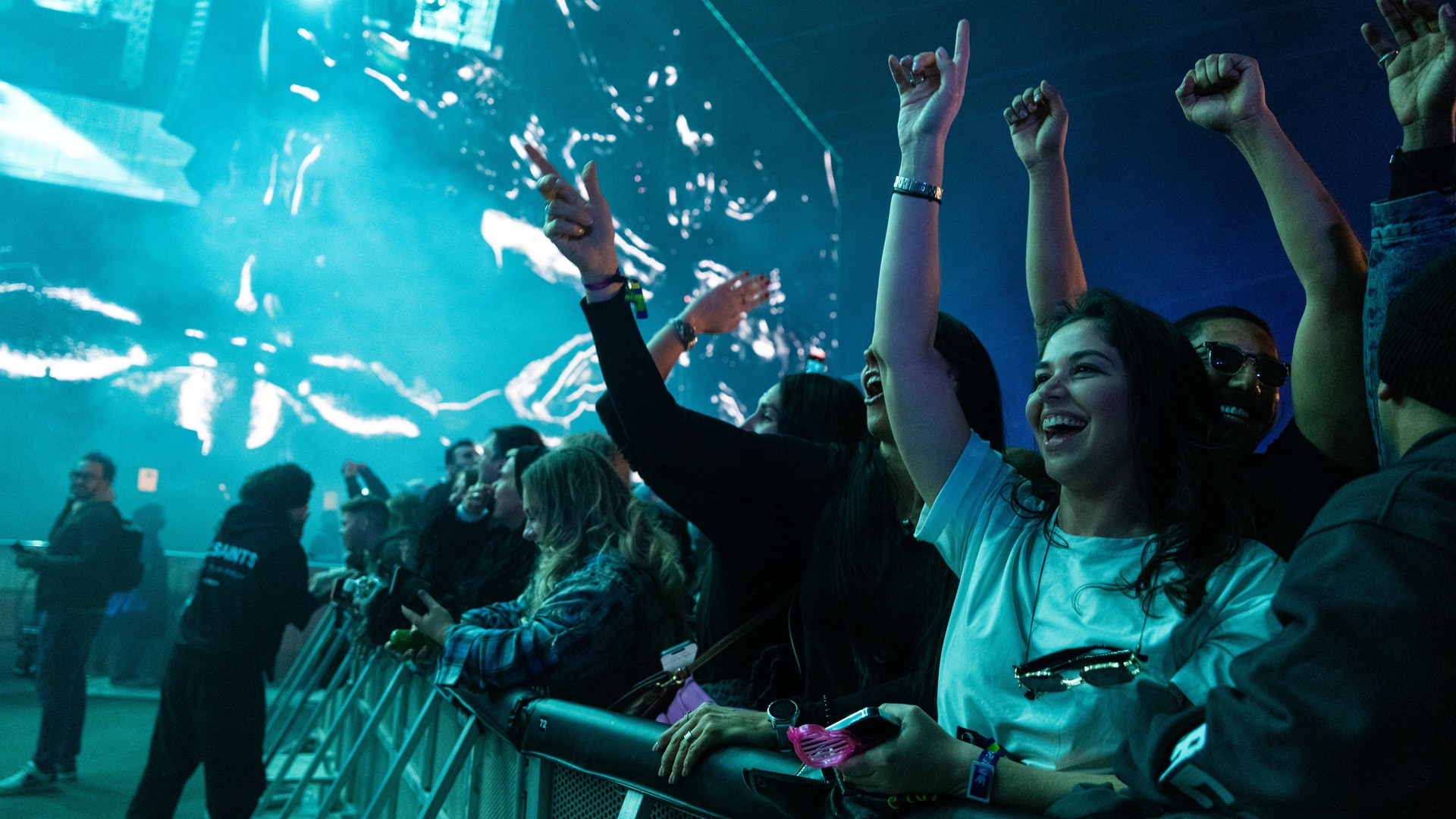
In a concert crowd, that might mean dancing and celebrating together in unity.
At a civic demonstration, it might mean collective expressions of solidarity or protest.
At a sporting event, it may result in less desirable actions, such as seen at the recent Ryder Cup. Importantly – these actions were those of the minority.
Understanding that multiple psychological groups can coexist within a single physical crowd is vital. Each group may have its own motivations, expectations, and emotional drivers.
Recognising and working with these identities – rather than treating the crowd as a single entity – is key to effective Crowd Safety management.
The Role of Leadership and Authority
Leadership plays a decisive role in shaping crowd behaviour.
Leaders influence group identity by setting norms, articulating goals, and representing shared values.
Modern interpretations of classic studies, such as Milgram’s obedience experiments and the Stanford Prison Experiment, reveal that obedience is not blind. People follow authority figures they identify with and who they believe represent the group’s principles.
For event professionals, this highlights that effective crowd leadership – from organisers, stewards, and public officials – relies on alignment with the crowd’s purpose.
This echoes the point made by Mark in here in contributing to this article in The Guardian. As Mark noted, ‘It’s about knocking bad norms on the head early, or establishing good ones’
Leaders who communicate clearly and act consistently with the group’s expectations are far more likely to guide positive, cooperative behaviour.
Practical Crowd Management: Lessons for Event Organisers
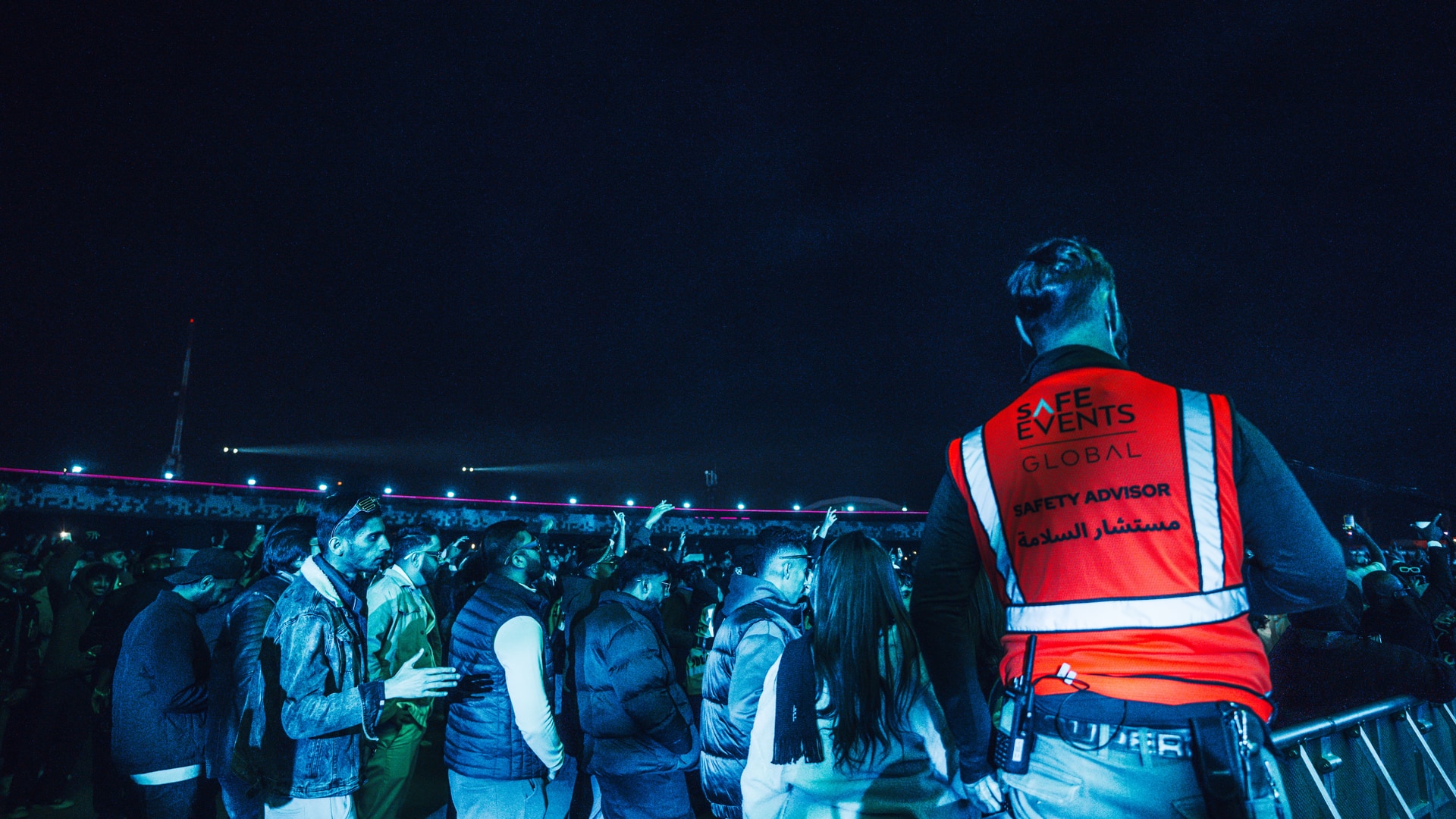
Event organisers and event safety professionals can apply the principles of crowd psychology in several ways:
- Move beyond the “dangerous crowd” assumption. Treating every large group as a threat can escalate tension. Instead, approach crowds with understanding and respect. Actual examples demonstrate that when organisers and authorities treat crowds with understanding rather than suspicion, safety improves. From the London 2012 Olympics and UEFA Women’s EURO 2022, facilitative approaches build trust and cooperation. Events that foster dialogue, empathy, and respect consistently see fewer incidents and stronger crowd cohesion. This proves that a well-managed crowd is not a threat, but a partner in safety.
- Adopt facilitative management. Support legitimate crowd aims and engage proactively with organisers, subgroups, and leaders. When people feel heard and respected, cooperation increases and conflict decreases. Real-world practice shows that facilitative management transforms how crowds respond. Events like COP26 and Roskilde Festival show that engaging participants as partners – rather than policing them as problems – builds trust and strengthens safety.
- Encourage self-regulation. Crowds that feel ownership of their space often police themselves. Positive leadership and communication enable the majority to isolate and discourage disruptive individuals. Real-world examples illustrate how self-policing emerges when crowds feel ownership of their environment. At Glastonbury Festival, attendees collectively uphold sustainability standards. During the Women’s March and Black Lives Matter demonstrations, participants actively diffused tensions and maintained peaceful conduct.
- Communicate shared goals. Clearly convey what is expected and why. Open, respectful dialogue between organisers, participants, and authorities builds mutual trust. Real examples show that when organisers and authorities communicate not only what to do but why it matters, crowds respond positively. The London Olympics, Hajj pilgrimage, and Pride in London demonstrate that clear, respectful communication aligned with shared purpose transforms compliance into cooperation. Crowds that feel part of a common mission are calmer, safer, and more self-organising – reinforcing that trust and transparency are the most powerful safety tools of all.
These practices align with the principle of Safety by Design – embedding safety considerations early in event planning.
You can learn more about this approach in Safety by Design for Events.
Understanding Crowd Psychology for Safer Events
Crowds are not inherently irrational or dangerous.
They are made up of individuals acting according to shared identities, guided by leadership and context.
By applying crowd psychology, event organisers can design environments that support positive behaviour, enhance safety, and build trust between participants and authorities.
Safe Events Global integrates psychological insight into every stage of our Event Safety and Crowd Safety planning – ensuring that every event, from festivals to civic gatherings, is safe, compliant, and inclusive.
Contact us to learn how our specialists can support your next event.